
Dispatch · June 18, 2026 · 5 min · By Leopold Ferreira
Cryotherapy for keloids: freezing the scar, and its trade-offs
Cryotherapy freezes keloid tissue to shrink it, and it works best in combination.
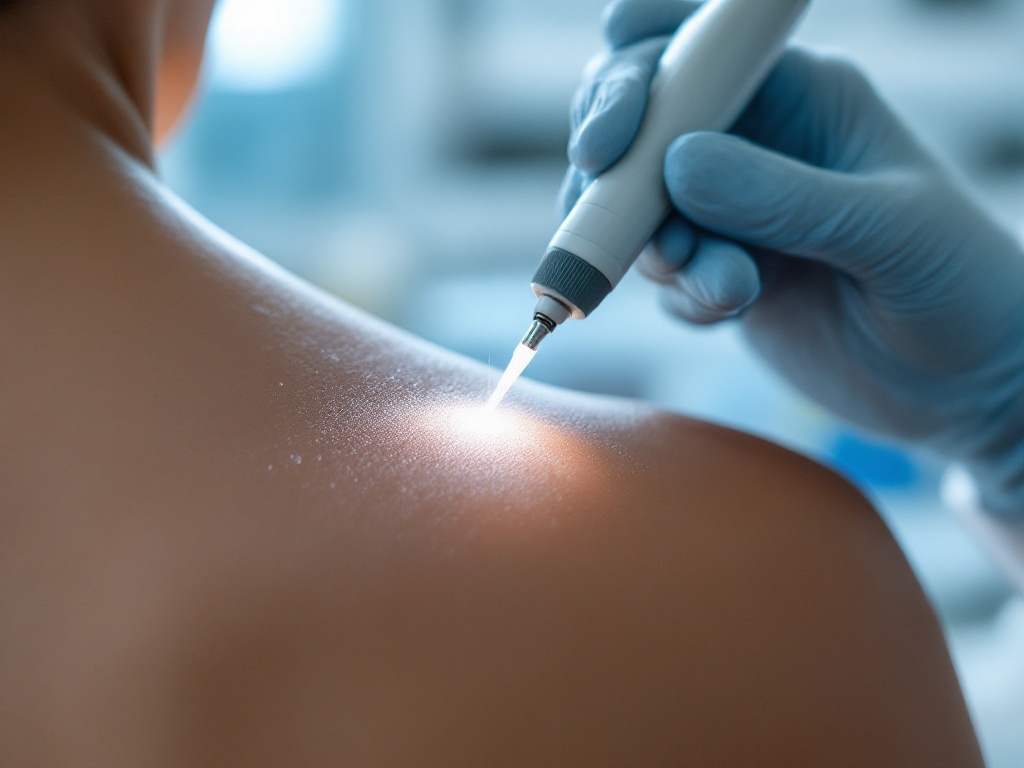
Cryotherapy treats a keloid by freezing it, using liquid nitrogen to destroy the excess scar tissue and trigger it to shrink. It is most useful for smaller keloids and is frequently paired with steroid injection, where freezing softens the scar and makes the tissue more receptive to the drug that follows.
There are two broad approaches. Surface cryotherapy freezes the keloid from the outside, while intralesional cryotherapy uses a probe inserted into the scar to freeze it from within, which reaches deeper tissue and tends to produce more flattening in fewer sessions. Both are done in the clinic and usually require a short series rather than a single visit.
The main trade-off is pigment. Freezing can leave a lighter patch of skin where the keloid was, and that risk is higher in deeper skin tones, so the technique has to be used cautiously and sometimes avoided in favor of gentler options. Blistering, temporary swelling, and slow healing at the treated site are also common in the weeks afterward.
Cryotherapy is rarely a standalone cure. Its real value is as one tool in a combined plan, most often alongside steroid injections, and its suitability depends heavily on the size of the keloid and the patient's skin type. Used on the right scar in experienced hands, it can meaningfully reduce a keloid that has not responded to injection alone.
Related reading: Keloids and skin of color: tailored, careful treatment and Steroid injections: the first-line keloid treatment.
Further reading: Intralesional cryotherapy for hypertrophic scars and keloids: a review (Scars Burn Heal 2017); Minimally Invasive Technologies for the Treatment of Hypertrophic Scars and Keloids: Intralesional Cryosurgery ( 2020).