
Dispatch · July 2, 2026 · 6 min · By Leopold Ferreira
Fluorouracil (5-FU) injections: a second-line option for stubborn keloids
When steroids alone stall a keloid, adding 5-fluorouracil often gets it moving again.
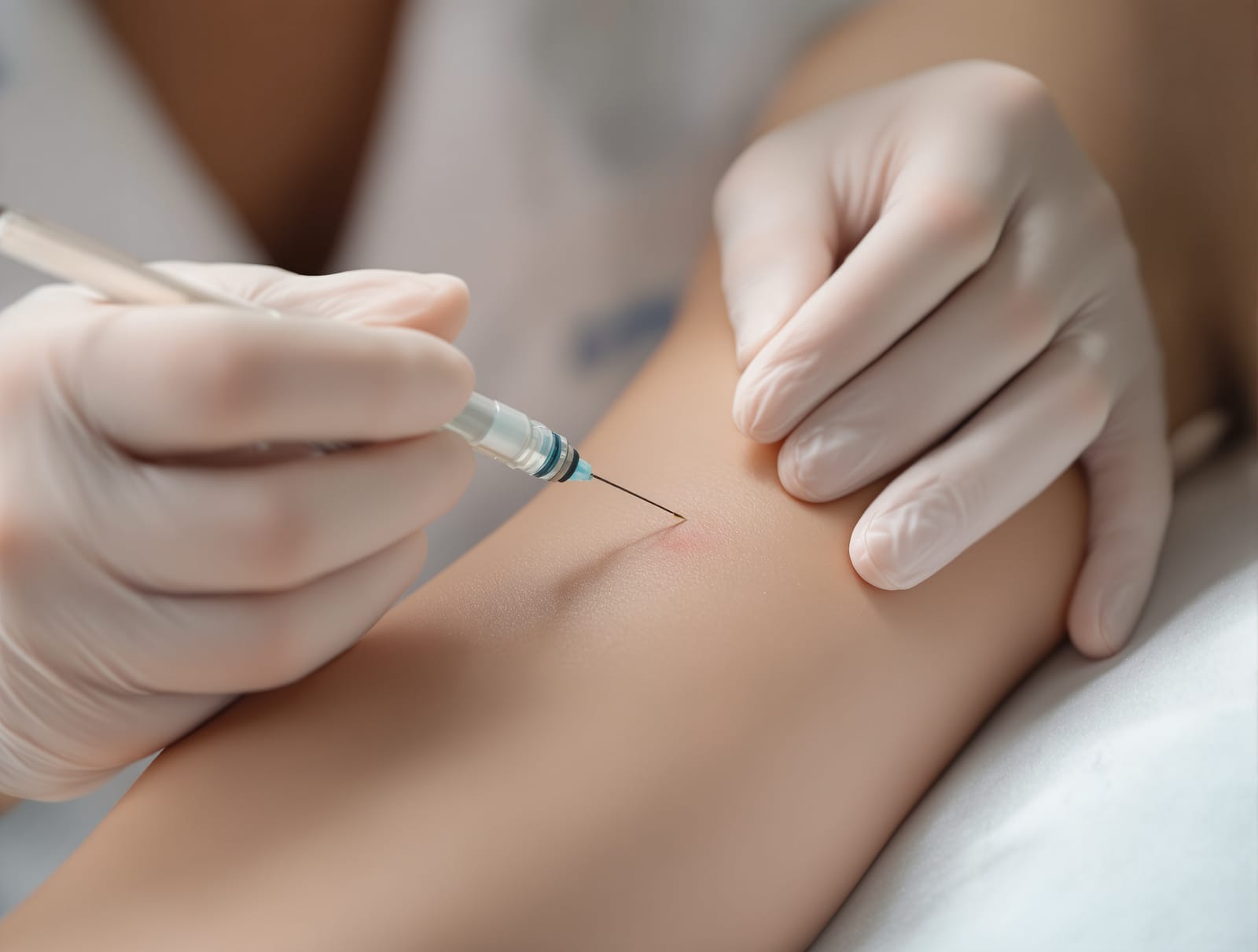
Not every keloid answers to steroids alone. Corticosteroid injection is the standard first move for most keloids, and for many scars it is enough. But a meaningful share plateau after a few sessions, flattening partway and then refusing to budge, or thinning and lightening the surrounding skin before the keloid itself gives way. When that happens, dermatologists frequently reach for fluorouracil, better known as 5-FU, either injected on its own or mixed into the same syringe as the steroid.
What 5-FU actually is. Fluorouracil is a chemotherapy agent that has been in medical use for decades, but in keloid care it is deployed in tiny, local doses injected directly into the scar rather than given through a vein. It works by interfering with the rapid cell division that drives excess collagen production, calming the overactive fibroblasts that keep a keloid growing. Because the drug stays in the scar tissue, the whole-body side effects people associate with chemotherapy are not part of the picture at these doses.
Why it is usually combined with a steroid. The most common protocol pairs 5-FU with triamcinolone, the standard keloid steroid, in a single injection. The two drugs act through different mechanisms, so the combination tends to flatten and soften keloids faster and more completely than either one alone. It also lets the clinician use less steroid, which reduces the skin thinning, lightening, and visible small blood vessels that higher-dose steroid can leave behind. An early clinical study of intralesional 5-FU reported marked improvement in most treated keloids (Nanda and Reddy, Dermatologic Surgery), and later reviews have supported the steroid-plus-5-FU combination as more effective and better tolerated than steroid on its own (StatPearls keloid overview, NIH).
What a course looks like. Like steroid injection, 5-FU is a series rather than a single shot. Sessions are usually spaced from one to a few weeks apart over a couple of months, and the keloid softens, flattens, and loses tenderness and itch progressively across the course. The number of visits depends on the size and stubbornness of the scar, and stubborn keloids may need the injections folded into a broader plan that also uses pressure, silicone, or laser. Patients who expect a one-visit cure are usually disappointed; those who commit to the full series are the ones who see durable flattening.
Side effects to expect. The injections can sting, and the treated area often bruises. A superficial sore or shallow ulcer at the injection site can appear and then heal over the following weeks, and temporary darkening of the skin, or hyperpigmentation, is common, especially on the way to improvement. These local effects are usually manageable and temporary, but they are the reason 5-FU belongs in experienced hands rather than being used casually.
Who should not have it. Because fluorouracil is a chemotherapy drug, it is avoided in pregnancy and while breastfeeding, and in people with certain bone marrow or blood count problems. A careful clinician will ask about these before starting. Pigment risk also deserves real attention: darkening and lightening of skin around the scar matter more, and can themselves be disfiguring, in deeper skin tones, so dosing and candidate selection should be handled by someone who routinely treats skin of color and knows how to keep the treatment from trading a keloid for a pigment problem.
Where it fits in the toolkit. 5-FU is rarely a first move and almost never the entire plan. It is one of the combination tools that has quietly improved once-poor keloid odds, sitting alongside vascular laser, cryotherapy, and surgery with adjuvant treatment as part of the multi-modal approach covered in advances in keloid treatment. The through line of modern keloid care is that combinations beat any single tool, and 5-FU earns its place by making the reliable workhorse, the steroid injection, work on scars that had stopped responding.
The takeaway. If your keloid has stalled on steroid injections alone, adding 5-fluorouracil is a well-supported next step, not an exotic one. It flattens and softens stubborn keloids more effectively than steroid by itself, lets the clinician dial back the steroid dose, and carries side effects that are mostly local and temporary. Ask a dermatologist experienced with keloids, and with your skin type, whether a combined 5-FU and steroid protocol makes sense for your scar.
Related reading: Steroid injections: the first-line keloid treatment and Keloids and skin of color: tailored, careful treatment.