
Field Notes · July 24, 2026 · 8 min · By Katarina Mbeki
Keloids and pregnancy: why they grow, when they settle, and what has to wait
Existing keloids commonly enlarge during pregnancy and often quiet down afterward. The clinical problem is that most of the standard treatments are exactly the ones nobody wants to give a pregnant patient.
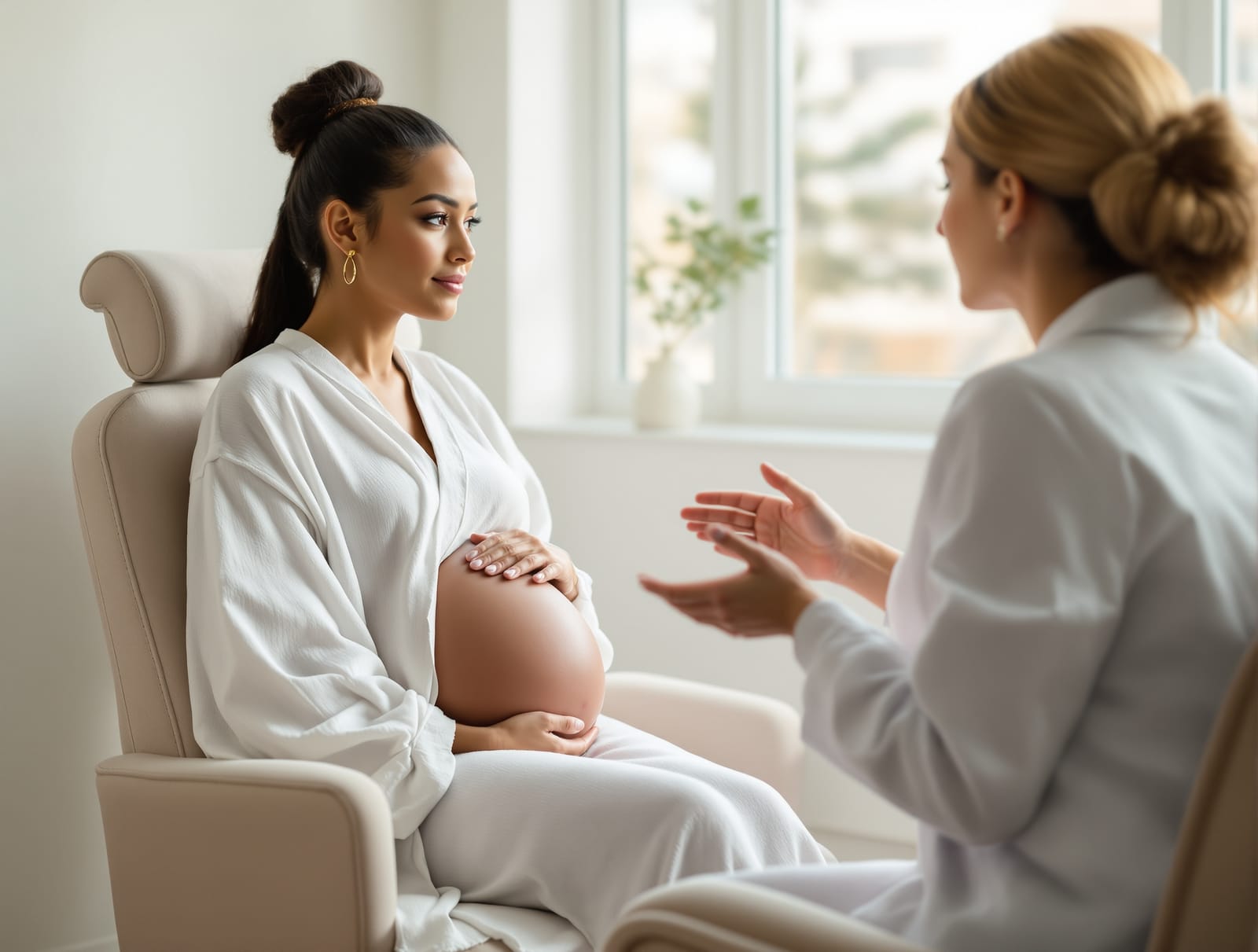
There is a pattern that shows up often enough in scar clinics to be worth naming, and it rarely appears in patient-facing material. A woman who has lived with a stable keloid for years, one that has not changed size in a long time, becomes pregnant and watches it start growing again. It gets thicker, redder, itchier, and sometimes noticeably larger, usually starting somewhere in the second trimester. Then, months after delivery, it frequently settles back down.
This is not a coincidence and it is not new. A case report from 1975 flagged what it called presumptive evidence that pregnancy estrogens influence keloid growth (Plast Reconstr Surg, 1975), and half a century later the observation has been revisited in the modern literature describing adverse effects of pregnancy on keloids and hypertrophic scars (Cureus, 2020). What has not caught up is the practical guidance, because the treatments that work best on keloids are largely treatments that clinicians are reluctant to use during pregnancy.
The original element in this piece is a timeline plus a decision frame. Below is a trimester-by-trimester map of what typically happens and what is usually reasonable at each stage, followed by an explicit wait-or-treat frame and the specific triggers that override waiting. It is assembled from the published pregnancy-and-keloid literature and from what is known about each treatment class rather than from any single source, and the reasoning is stated openly so you can see where the evidence stops and judgment begins.
Why pregnancy changes a keloid. A keloid is fibrous tissue that keeps producing collagen past the point where healing should have stopped, driven by fibroblasts that will not switch off. Pregnancy alters several of the inputs those cells respond to at once. Estrogen and progesterone rise dramatically. Blood volume increases by a large margin, which raises perfusion to the scar. The skin over the abdomen and breasts is placed under mechanical stretch, and mechanical tension is one of the best-established drivers of keloid growth anywhere on the body. Immune modulation shifts as well. So a keloid on the chest, shoulders, or abdomen is meeting hormonal, vascular, and mechanical pressure simultaneously.
That combination also explains the postpartum settling. Hormones fall, blood volume normalizes, and stretch releases. The scar does not disappear, but the growth phase that pregnancy pushed it into tends to end.
Trimester by trimester. First trimester. Change is usually minimal. What matters here is documentation, not treatment. Photograph the keloid against a ruler or a coin in consistent light and record the date. This one habit does more for later decision-making than anything else on this list, because the entire wait-or-treat question hinges on whether the scar is actually growing or whether it only feels that way.
Second trimester. This is when most reported change begins. Expect increased itch, increased redness, a firmer feel, and sometimes measurable growth. Itch and discomfort are usually the dominant complaints, more than size. Non-invasive measures carry the load here: silicone sheeting and pressure, which have no systemic exposure and are the mainstay of conservative management, plus cool compresses and loose clothing over the site. Avoid new friction sources over the scar, including bra seams if the keloid sits on the chest or under the breast.
Third trimester. Growth typically plateaus or continues slowly, and stretch over the abdomen is at maximum. If the keloid is abdominal and a caesarean is planned or possible, this is the point to raise it with both the obstetric team and a dermatologist or plastic surgeon, because a keloid in or near the planned incision field is a genuine surgical planning question rather than a cosmetic afterthought. There is published case work on exactly this scenario, on managing a caesarean scar keloid in pregnancy with a multidisciplinary approach (Cureus, 2025).
The first six months postpartum. This is the observation window that most people skip. Many keloids partially regress in this period as hormones and stretch normalize. Starting an aggressive treatment course at six weeks postpartum risks treating a scar that was about to improve on its own, and then crediting the treatment for it. Photograph monthly. If breastfeeding, that is a separate exposure conversation with its own answers, and it needs to be raised explicitly rather than assumed.
After that. Once the scar has been stable for a few months and feeding decisions are settled, the standard ladder becomes available again, starting with intralesional steroid injections, which remain the first-line workhorse for most keloids.
The wait-or-treat frame. Default to waiting, and let three specific findings override that default. Override one, functional impairment. A keloid restricting shoulder or neck movement, or one positioned where it will interfere with delivery or with a planned incision, is a functional problem, not a cosmetic one, and it gets escalated regardless of timing. Override two, uncontrolled symptoms. Itch and pain severe enough to disrupt sleep are worth treating on their own terms, and there are approaches to symptom control that do not require systemic exposure. Override three, rapid or atypical change. A keloid that grows unusually fast, ulcerates, bleeds without trauma, or changes character rather than simply enlarging needs assessment rather than reassurance. Rapid change in a long-stable scar is one of the few situations where the pregnancy explanation should not be assumed to be the whole answer.
Absent one of those three, the case for waiting is straightforward. You avoid exposure decisions with limited data, you avoid treating a scar during its most reactive phase, and you get to make the real decision later with a clearer picture of what the scar actually settled at.
What the studies do not tell you. This is the honest part, and it is a large gap. The evidence base linking pregnancy to keloid growth consists largely of case reports, small series, and mechanistic reasoning about hormone receptors on fibroblasts. There is no prospective cohort following keloids through pregnancy with standardized measurement, which means nobody can tell you what percentage of keloids enlarge, by how much on average, or what proportion regress afterward. Every number you might want here is missing. What exists is a consistent direction of observation, repeated over decades, which is enough to plan around but not enough to promise. Anyone quoting you a specific percentage is inventing it.
There is a second gap worth naming. Treatment safety data in pregnancy for keloid-specific therapies is thin because pregnant patients are systematically excluded from the trials, so much of what clinicians rely on is extrapolated from use of the same agents for other indications. That is a reason for caution rather than a reason for alarm, and it is a reason to make these decisions with a named clinician rather than from an article.
If you are planning a pregnancy and already have a keloid. The most useful window is before conception, not during. Getting an actively growing keloid into a stable state beforehand, and understanding why keloids recur, changes what you are managing during the pregnancy itself. The same logic applies to elective surgery: if a caesarean or any other planned procedure is on the horizon and you are keloid-prone, the preventive measures taken before and immediately after the incision matter more than anything done a year later.
For a general overview of keloid treatment options and what each one realistically achieves, the American Academy of Dermatology maintains a patient-facing summary.
The line worth taking away: a keloid that flares in pregnancy is usually responding to a temporary set of conditions, and the most common mistake is treating it as though those conditions are permanent.