
Explainer · September 7, 2026 · 6 min · By Ifeoma Stanfield
Can a dermatologist remove keloids? What the first visit actually decides
Yes, but almost never on the first visit, and almost never with a scalpel alone. The appointment is really a triage that sorts your keloid into one of four treatment tracks, and you can run most of that triage on yourself before you sit down.
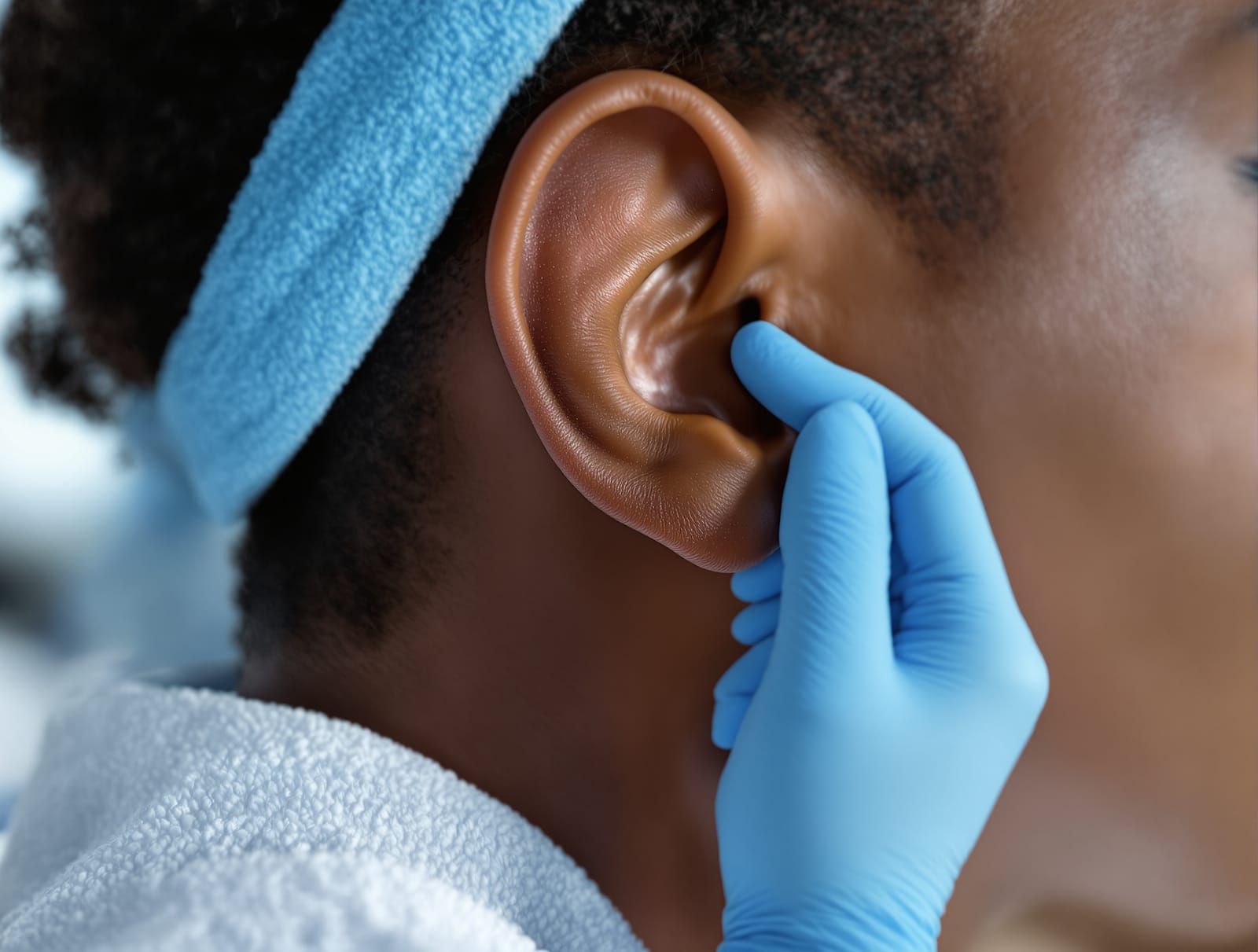
People search for whether a dermatologist can remove keloids expecting a yes or no, and the honest answer is a yes with a structure to it. A board-certified dermatologist can remove keloids, and for most keloids the dermatologist is the right first door, ahead of a plastic surgeon. But the word remove is doing a lot of work. What a dermatologist actually does at a first keloid visit is decide which of a handful of treatment tracks the scar belongs on, and only one of those tracks involves cutting. Understanding that sorting step is the difference between leaving the appointment reassured and leaving it confused about why nobody offered to take the thing off.
The original element in this piece is a first-visit decision map: the four questions a dermatologist is really answering while they look at your scar, what each answer routes you toward, and a short self-check you can do at home so you walk in already knowing which track you are likely on. The published treatment algorithms describe the tracks; nothing describes the visit from the chair.
Question one: is this actually a keloid? The first thing the dermatologist settles is not treatment but identity. A keloid grows beyond the borders of the original injury and keeps going; a hypertrophic scar stays inside the wound and often flattens on its own over a year or two. The distinction matters because it changes everything that follows, which is why the site's explainer on what a keloid is and how it differs from a scar is the page to read before any appointment. Most keloids are diagnosed by eye and by history, and a biopsy is reserved for the rare scar that looks or behaves unusually; the diagnosis guide covers those exceptions. Expect to be asked exactly what caused it, how long ago, whether it is still growing, and whether anyone in your family gets them.
Question two: where is it and how old is it? Location predicts behavior. Earlobe keloids on a stalk are among the few that dermatologists cut readily, because the shape allows a clean excision and a pressure earring afterward. Chest, shoulder and upper back keloids sit on high-tension skin and are the ones most likely to come back larger if cut, which is why a surgeon who has seen a few of those is slow to reach for a blade. Age matters in the opposite direction from what most patients assume: a young, red, still-growing keloid is often more responsive to injections than an old, pale, quiet one, so being told to start with needles rather than surgery is not a brush-off.
Question three: what does removed mean to you? This is the question patients are rarely asked out loud, and it is the one that most changes the plan. Some people want the bump flat and the itch gone and do not care whether a mark remains. Others want the skin returned to how it was, which no current treatment reliably delivers. A dermatologist who hears the first goal will usually start with intralesional steroid injections, sometimes combined with cryotherapy or 5-fluorouracil, on a four to six week cycle; the steroid injection guide explains what those visits feel like. A dermatologist who hears the second goal has to have a harder conversation, because excision alone has a recurrence rate that the NIH StatPearls review of keloids puts somewhere between 45 and 100 percent depending on the series, and the regrown scar is often bigger than the original.
Question four: how much recurrence risk will you accept, and for what? Only after the first three answers does the surgical track come into focus, and even then it is surgery plus something. The updated international scar management algorithms published in Dermatologic Surgery treat excision as one step in a combination, followed by steroid injections, pressure, silicone or radiation, never as a stand-alone cure. A 2025 retrospective comparison in BMC Surgery of surgery alone versus surgery with radiotherapy or injections found the same shape of result the guidelines assume: adding an adjuvant is what keeps the scar from returning. That is why a dermatologist who agrees to remove a keloid will usually also book the follow-up injections before the excision happens, and why a keloid on a high-risk site may be referred out for excision plus superficial radiation, which is covered on this site in its own piece.
The self-check to run before you go. Stand in front of a mirror with the scar in good light and answer three things in writing. First, does the scar extend past the edge of the original cut, piercing, or pimple, and has it changed size in the last six months? If it has crossed the border and is still moving, you are almost certainly looking at an active keloid and the injection track is the likely opening move. Second, where is it? Earlobe, especially on a stalk, points toward a surgical conversation early; chest, shoulder, jawline or upper back points toward injections first and surgery only with an adjuvant. Third, write one sentence about what you want the scar to do. If the sentence contains the word flat or the word itch, you and the dermatologist will probably agree quickly. If it contains the word gone, bring that sentence to the visit, because it is the honest basis for the recurrence conversation and the doctor cannot have it for you.
What the first visit usually does not do. It does not cut. Very few dermatologists excise a keloid at the initial consultation, and the ones who do are almost always looking at a pedunculated earlobe scar. It also does not commit you to a single modality forever; the American Academy of Dermatology treatment overview lists injections, cryotherapy, laser, surgery, radiation, pressure, and silicone as tools that are combined and re-sequenced as the scar responds. What the first visit does do is take a photograph and a measurement, which you should ask for a copy of, because a keloid that is being treated over months is judged against its own baseline and memory is a poor witness.
When a plastic surgeon is the right door instead. A dermatologist handles the great majority of keloids, but two situations route elsewhere. A keloid that is very large, that spans a joint, or that would leave a defect needing a flap or graft to close is plastic surgery territory, usually with radiation oncology on the same team. And a keloid on a site the dermatologist has already treated through a full injection series without response is a reasonable moment to ask for a surgical opinion, not because injections were wrong, but because the sequence has run its course. Either way the referral usually comes from the dermatologist, which is one more reason to start there.
The takeaway for the person typing the question into a search bar is simple. A dermatologist can remove keloids, and for most people is the right first appointment, but the honest work of that appointment is sorting, not cutting. Walk in having answered the four questions yourself and the visit becomes a plan rather than a verdict.