
Explainer · August 8, 2026 · 5 min · By Ifeoma Stanfield
Triamcinolone vs. 5-FU: What Actually Happens Inside a Keloid When You Inject It
Both drugs are injected into scar tissue, both have decades of use, and both fail in predictable ways. Here is how they work at the cellular level, and why many clinicians now combine them.
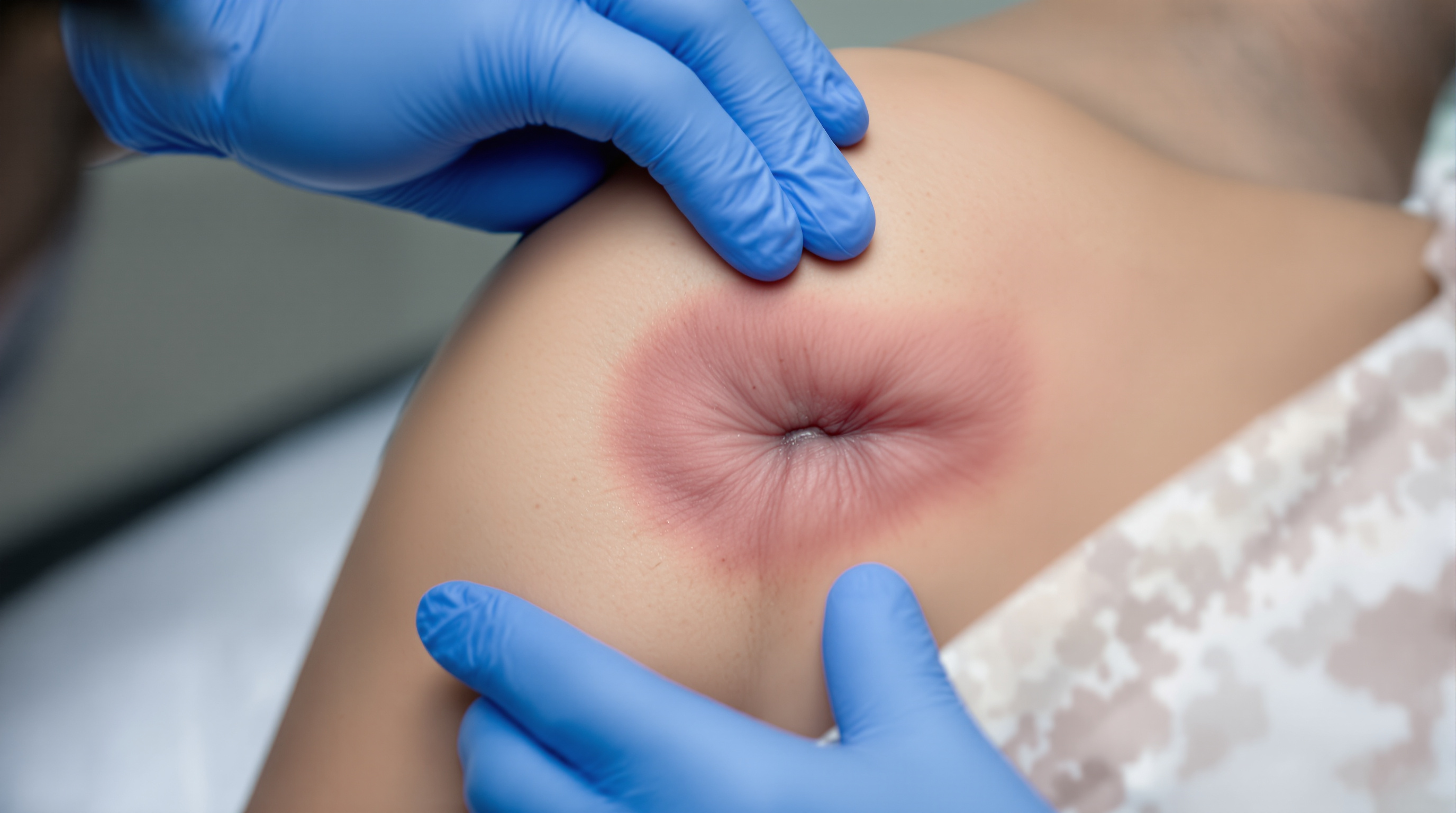
Intralesional injection remains the workhorse of keloid treatment. Two drugs dominate the conversation: triamcinolone acetonide, a corticosteroid, and 5-fluorouracil, a chemotherapy agent repurposed for scars. Patients often hear these described interchangeably as "the shot," but they attack keloid biology through different mechanisms, produce different side effects, and fail for different reasons. Understanding the distinction helps set realistic expectations before a needle ever touches skin.
What a keloid actually is, briefly. A keloid is not just a thick scar. It is a fibroproliferative lesion in which fibroblasts, the cells that manufacture collagen, become locked in an overactive state. They ignore the normal stop signals that end wound healing, they overproduce type I and type III collagen, and they resist apoptosis, the programmed cell death that normally clears excess cells. The lesion also recruits inflammatory cells and grows its own small blood supply. Any effective treatment has to interrupt at least one of these processes.
How triamcinolone works. Triamcinolone is an anti-inflammatory drug first, and that is where its keloid effect begins. It suppresses inflammatory mediators that keep fibroblasts stimulated, reduces the activity of transforming growth factor beta 1, a key driver of collagen production, and increases collagenase activity, which breaks down existing collagen. The visible result, when it works, is a lesion that softens, flattens, and stops itching or hurting. Published response rates vary widely, roughly 50 to 100 percent for initial flattening, but recurrence after steroid monotherapy is common, often reported in the range of 30 to 50 percent within a few years.
The side effect profile is the main limitation. Because triamcinolone thins tissue indiscriminately, repeated injections can cause skin atrophy, hypopigmentation, and telangiectasias, the fine visible vessels that appear when overlying skin thins. Hypopigmentation is a particular concern for patients with darker skin, the same population most prone to keloids in the first place. The lightened halo around an injected keloid can persist for a year or longer, and in some cases does not fully resolve.
How 5-FU works. 5-fluorouracil is an antimetabolite. It interferes with DNA synthesis, which means it preferentially hits cells that are actively dividing. In a keloid, the most actively dividing cells are the overgrown fibroblasts. 5-FU slows their proliferation, pushes some toward apoptosis, and inhibits the same TGF beta signaling pathway that drives collagen overproduction. It does not thin normal tissue the way a steroid does, so atrophy and pigment loss are far less common.
Its drawbacks are different: injection site pain, temporary ulceration, and a transient darkening called hyperpigmentation at the treated site. Because the doses used in scars are tiny compared with oncology doses, systemic effects are rare, though clinicians typically avoid it in pregnancy and check for anemia risk in patients receiving frequent treatments.
Why combination therapy became the default in many practices. Head to head studies and meta-analyses over the past two decades have fairly consistently found that mixing the two drugs, commonly a small proportion of triamcinolone diluted into 5-FU, outperforms either drug alone. The logic is mechanistic. The steroid quiets inflammation and dissolves existing collagen, while 5-FU suppresses the fibroblast proliferation that would otherwise rebuild the lesion. The combination also allows a lower steroid dose, which reduces atrophy and pigment changes. Reported recurrence rates with combination therapy are generally lower than with steroid alone, though study quality varies and no regimen eliminates recurrence entirely.
What neither drug can do. Injections work best on smaller, younger, actively growing keloids. Large, old, densely collagenized lesions respond slowly or incompletely because the drug cannot meaningfully remodel a dense collagen mass, and the mechanical difficulty of injecting rock hard tissue limits how much drug actually gets in. For bulky keloids, injections are usually one part of a plan that may include surgical debulking followed by adjuvant treatment, since excision alone carries recurrence rates historically reported anywhere from 45 to 100 percent.
Practical expectations. Both drugs require a series, typically every 3 to 4 weeks, and most patients need at least 3 to 6 sessions before judging response. Improvement is measured in softening, flattening, and symptom relief, not disappearance. A treated keloid usually leaves behind a flat, discolored patch of scar rather than normal skin. Anyone promised complete erasure in one or two sessions is hearing marketing, not medicine.
The bottom line. Triamcinolone dismantles the inflammatory and collagen machinery of a keloid but can damage surrounding tissue. 5-FU targets the dividing fibroblasts with fewer cosmetic side effects but more injection discomfort. Neither is a cure, both require maintenance vigilance, and the combination, at reduced steroid concentration, currently represents the best supported injectable approach for most patients. As always, keloid care is long term management of a biological tendency, not a one time fix, and the honest measure of success is a lesion that stays quiet.
Further reading: The safety and efficacy of intralesional triamcinolone acetonide for keloids and hypertrophic scars: A systematic review and meta-analysis (Burns 2021); Efficacy and Safety of Intralesional Triamcinolone Versus Combination of Triamcinolone with 5-Fluorouracil in the Treatment of Keloids and Hypertrophic Scars: A Systematic Review and Meta-analysis (Aesthetic Plast Surg 2020); Meta-analysis of the effects of triamcinolone acetonide alone and in combination with 5-fluorouracil for treating keloids (Zhonghua Shao Shang Za Zhi 2020).