
Explainer · August 8, 2026 · 5 min · By Ifeoma Stanfield
Why Steroid Injections Shrink Some Keloids and Barely Touch Others
Intralesional triamcinolone is the workhorse of keloid treatment, yet response rates vary widely. A closer look at the mechanism explains the gap, and why combination protocols are becoming the standard of care.
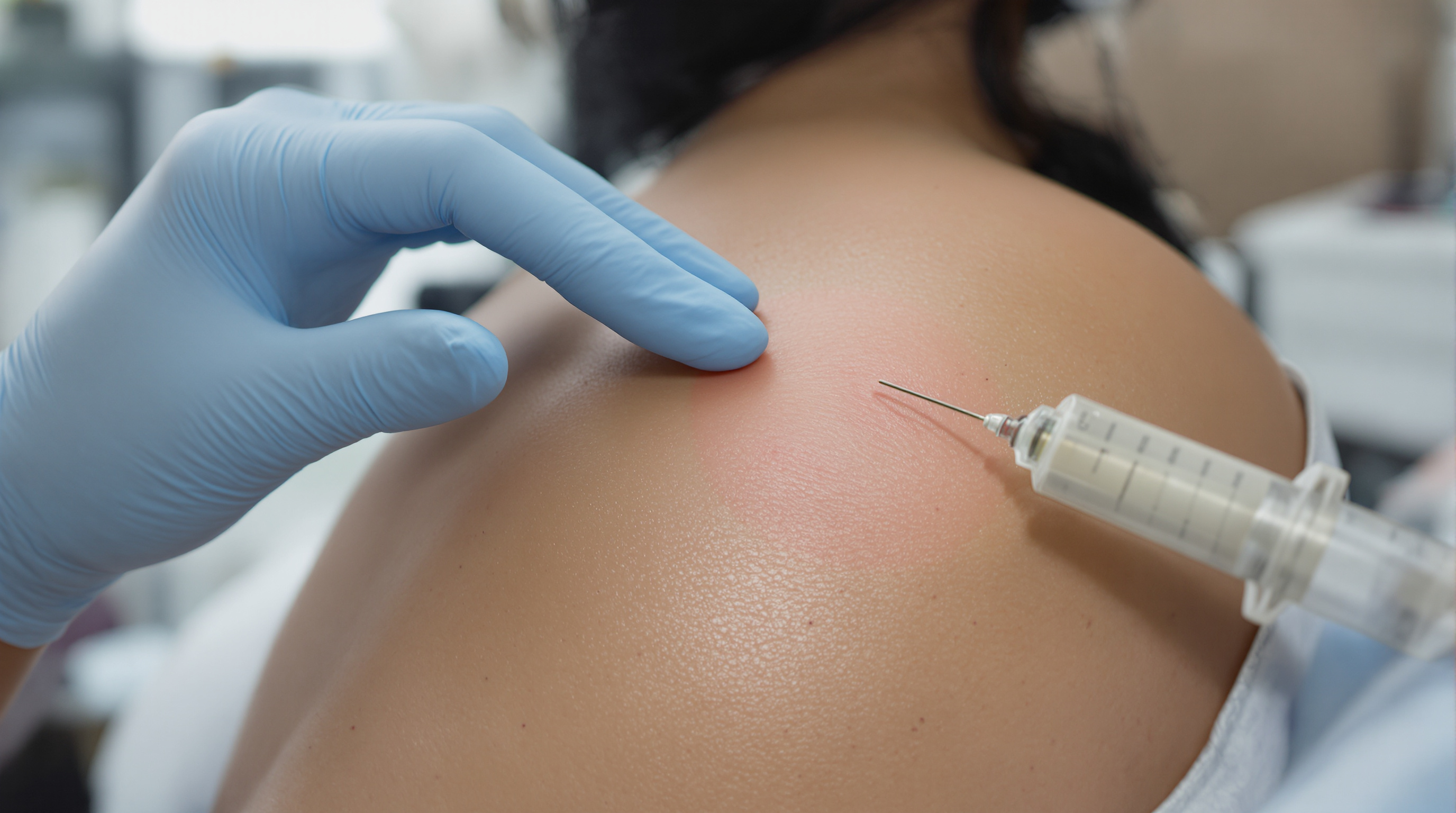
Ask almost any dermatologist how they start treating a keloid and the answer is usually the same: intralesional corticosteroid injection, most often triamcinolone acetonide. It has been the first line therapy for more than five decades. Yet patients comparing notes online quickly discover a puzzle. One person reports a raised earlobe keloid flattening after three sessions. Another describes a chest keloid that softened slightly, then rebounded. Both received the same drug. Understanding why requires looking at what the steroid actually does inside scar tissue, and what it cannot do.
What the injection is actually doing. A keloid is not simply excess scar. It is a lesion in which fibroblasts remain abnormally activated, producing collagen, especially type I collagen, at a rate that outpaces the enzymes that break collagen down. Triamcinolone attacks this imbalance from several directions at once. It suppresses inflammatory signaling, which reduces the cytokines, particularly transforming growth factor beta, that keep fibroblasts in overdrive. It directly slows fibroblast proliferation and collagen synthesis. And it increases the activity of collagenase, the enzyme that degrades existing collagen, partly by reducing the inhibitors that normally hold collagenase in check. In short, it turns down production and turns up demolition.
Why response varies so much. Several factors predict weaker results, and none of them are about willpower or skincare habits. First, lesion age and density matter. Older keloids are dominated by thick, tightly packed, poorly vascularized collagen bundles. The drug has to physically reach fibroblasts to work, and dense, hypocellular tissue resists both the needle and drug diffusion. This is why clinicians often note that the injection itself feels harder in mature lesions, and why some pretreat with cryotherapy: a brief freeze creates edema in the tissue that makes subsequent injection easier and may improve drug distribution.
Second, anatomic location plays a role. Keloids over high tension zones, the sternum, shoulders, and upper back, experience constant mechanical stretch. Mechanical tension is itself a signal that activates fibroblasts through mechanotransduction pathways. A steroid can quiet inflammatory signaling, but it does not remove the physical force that keeps restimulating the lesion. Earlobe keloids, by contrast, sit in low tension skin and tend to respond better and recur less.
Third, technique and concentration matter more than many patients realize. Triamcinolone is typically used at 10 to 40 milligrams per milliliter, injected into the body of the lesion, not underneath it and not into surrounding normal skin. Injecting too superficially or too dilutely undertreats. Injecting too much, too concentrated, or too often produces the familiar side effects: skin atrophy, hypopigmentation that is especially visible in darker skin tones, telangiectasias, and a sunken appearance around the scar. Sessions are usually spaced 3 to 6 weeks apart, and meaningful flattening often takes 3 to 6 sessions or more. Stopping after one or two injections is one of the most common reasons treatment appears to fail.
The recurrence problem. Even when a keloid flattens, the underlying fibroblast population is suppressed, not eliminated. Published recurrence rates after steroid monotherapy vary widely, with many reports in the range of roughly one third to one half of treated lesions over time. This is not a flaw in the drug so much as a reflection of keloid biology: these lesions behave less like ordinary scars and more like a chronic, low grade fibroproliferative condition with a genetic component. Family history and skin of color are both established risk factors.
Why combination therapy is winning. Because steroids and other agents work through different mechanisms, pairing them makes biological sense, and clinical evidence increasingly supports it. The most studied pairing is triamcinolone plus 5-fluorouracil, a chemotherapy agent that blocks fibroblast proliferation through a separate pathway. Multiple comparative studies suggest the combination flattens keloids more effectively than steroid alone, with fewer atrophy and pigment side effects because lower steroid doses can be used. Cryotherapy before injection, silicone gel sheeting between sessions, and pressure therapy for ear keloids each address different parts of the problem: drug delivery, hydration and occlusion of the scar surface, and mechanical signaling respectively. For large or repeatedly recurrent keloids, surgical removal followed promptly by adjuvant treatment, such as injections or superficial radiation, addresses the well documented risk that excision alone can trigger regrowth larger than the original lesion.
The practical takeaway. Steroid injections remain a genuinely effective, evidence supported first step, particularly for smaller and younger keloids. But a partial response is not a dead end. It is usually a signal that the lesion needs either more sessions, a technique adjustment, or a second mechanism added to the plan. Patients who understand that keloid care is a process measured in months, not appointments, tend to make better decisions and abandon effective treatment less often. Anyone with a keloid that is painful, itchy, growing, or unresponsive after several properly spaced sessions should discuss combination options with a board certified dermatologist or plastic surgeon rather than concluding that nothing works.
Further reading: Experimental gene therapy of keloid in vivo using recombinant adenovirus coding for Fas gene with steroid hormone (Zhonghua Zheng Xing Wai Ke Za Zhi 2007); Strategy for Successful Management of Facial Keloid Using Triamcinolone Injection as Adjunct to Surgery (J Craniofac Surg 2016).