
Explainer · August 7, 2026 · 5 min · By Ifeoma Stanfield
Why Steroid Injections Shrink Keloids, and Why They So Often Come Back
Intralesional triamcinolone is the workhorse of keloid treatment, but recurrence rates are stubbornly high. Here is what the drug actually does inside a scar, why it fails, and how combination protocols are changing the math.
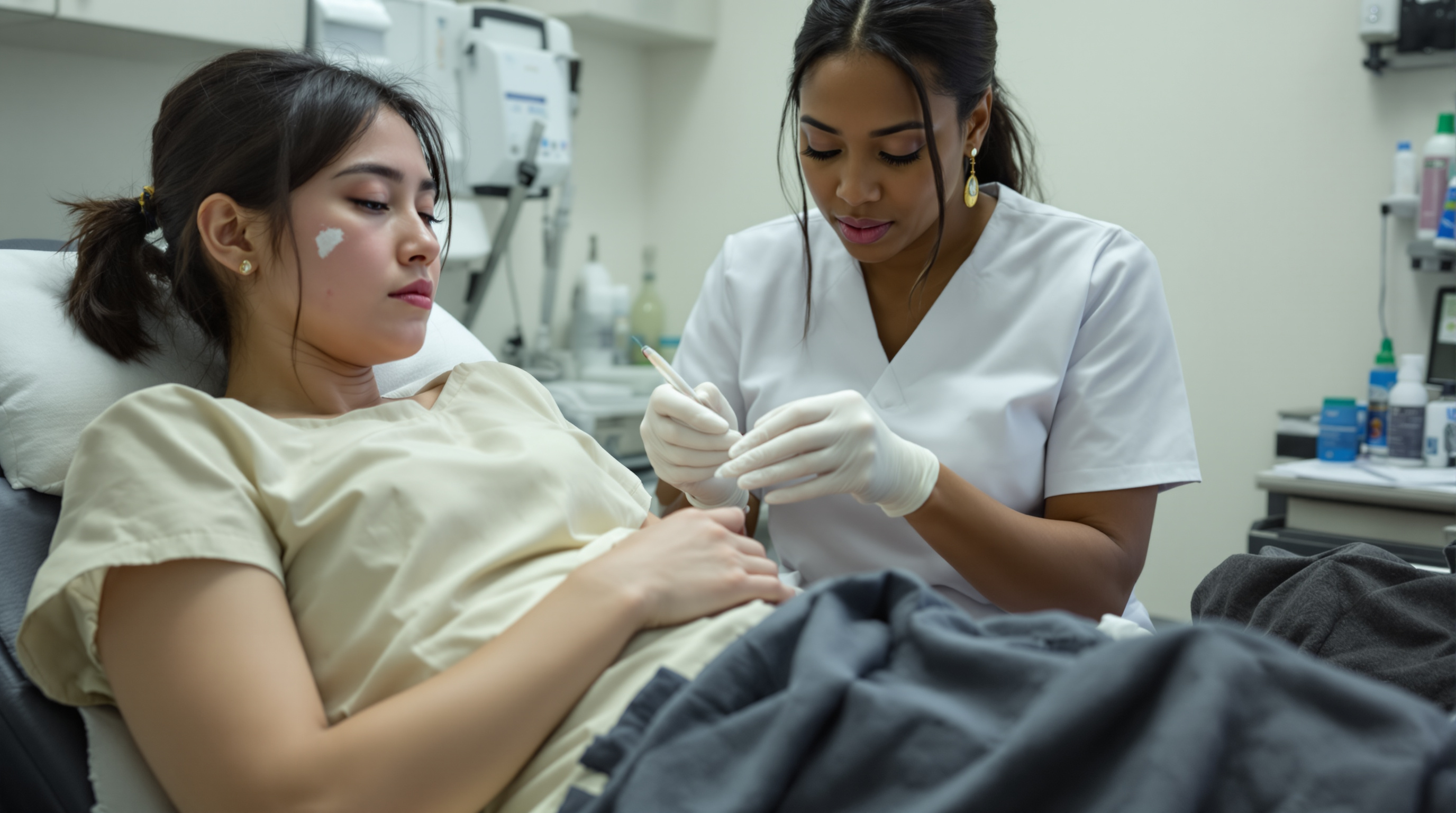
Ask most dermatologists what they reach for first when a patient presents with a raised, itchy keloid, and the answer is almost always the same: intralesional triamcinolone acetonide, a corticosteroid injected directly into the scar. It has been the standard of care for decades. It is cheap, widely available, and it works, at least at first. What patients are told less often is that keloids treated with steroid injections alone recur somewhere between 30 and 50 percent of the time within a few years, depending on the study and the follow up period. Understanding why requires understanding what the drug is actually doing.
What a keloid is, mechanically. A keloid is not simply a thick scar. It is the product of fibroblasts, the cells responsible for building connective tissue, that have failed to receive the normal stop signal after wound healing. These fibroblasts keep producing collagen, particularly type I and type III collagen, long after the wound has closed. The result is a dense, disorganized mass of collagen bundles that grows beyond the borders of the original injury. Keloid fibroblasts also show elevated sensitivity to transforming growth factor beta, a signaling molecule that drives collagen synthesis, and they resist apoptosis, the programmed cell death that would normally clear them out.
What triamcinolone does. Injected corticosteroid attacks this process on several fronts. It suppresses inflammation, which reduces the itching and tenderness patients feel. It inhibits fibroblast proliferation and dampens collagen synthesis. Critically, it also increases the activity of collagenase, the enzyme that breaks down existing collagen, by reducing levels of the inhibitors that normally keep collagenase in check. In plain terms, the drug slows the construction crew and speeds up the demolition crew at the same time. Over a series of injections, typically spaced three to six weeks apart, the keloid softens and flattens.
Why recurrence happens anyway. The problem is that triamcinolone changes the behavior of keloid fibroblasts without eliminating them. Once injections stop and the drug clears, the underlying cellular abnormality remains. The fibroblast population in and around the scar still carries the same dysregulated signaling, the same resistance to apoptosis, the same exaggerated response to any new inflammatory trigger. A minor irritation, friction, or even nothing identifiable at all can restart collagen overproduction. This is why keloids on high tension, high movement areas such as the chest, shoulders, and jawline recur more often than those on lower tension skin. Mechanical stretch itself is a known stimulus for fibroblast activity.
The dose problem. There is also a practical ceiling. Triamcinolone at higher concentrations, commonly 40 milligrams per milliliter, is more effective at flattening dense keloids but carries a higher rate of side effects: skin atrophy, visible thinning, telangiectasias, which are small dilated blood vessels, and hypopigmentation, which is especially noticeable and distressing in darker skin tones, the same populations most prone to keloids in the first place. Clinicians often dilute the drug or reduce frequency to avoid these effects, which trades safety for potency.
Where combination therapy comes in. This is the reason much of the current literature focuses on pairing triamcinolone with 5-fluorouracil, a chemotherapy agent used off label at low doses in scars. 5-FU works through a different mechanism: it blocks fibroblast proliferation by interfering with DNA synthesis and directly suppresses the TGF beta signaling pathway that drives collagen production. Multiple randomized trials and meta analyses have found that mixing the two drugs, often in a ratio favoring 5-FU, produces better flattening, lower recurrence, and fewer steroid related side effects than triamcinolone alone, because each drug can be used at a lower dose. The combination attacks both the symptoms and, partially, the proliferative engine underneath.
Similarly, when a keloid is surgically removed, excision alone carries recurrence rates that can exceed 50 percent, and in some series approach 100 percent, because surgery is itself a wound and the patient's biology has not changed. Excision followed promptly by adjuvant treatment, whether steroid injection, superficial radiation, or pressure therapy for earlobe keloids, brings recurrence down dramatically. The pattern across all of these approaches is consistent: no single modality addresses every part of keloid biology, and the treatments that hold up over time are the ones that layer mechanisms.
What this means for patients. If you are receiving steroid injections, three points are worth knowing. First, improvement is expected to be gradual, over several sessions, not immediate. Second, softening and flattening are realistic goals, but complete and permanent disappearance is not something monotherapy reliably delivers, and anyone promising it deserves skepticism. Third, ask about combination protocols and about a maintenance plan, because the period after visible improvement is exactly when recurrence risk is highest and monitoring matters most. Keloids are a chronic tendency of the skin, not a one time event, and the most honest framing of treatment is management, not cure.
Further reading: Experimental gene therapy of keloid in vivo using recombinant adenovirus coding for Fas gene with steroid hormone (Zhonghua Zheng Xing Wai Ke Za Zhi 2007); Strategy for Successful Management of Facial Keloid Using Triamcinolone Injection as Adjunct to Surgery (J Craniofac Surg 2016).