
Explainer · August 5, 2026 · 5 min · By Ifeoma Stanfield
Steroid Shots vs 5-FU for Keloids: What the Injection Actually Does
Both drugs shrink keloids by interrupting the scar's overactive repair loop, but they work on different targets, carry different side effects, and increasingly show up in the same syringe. Here is a plain-English comparison.
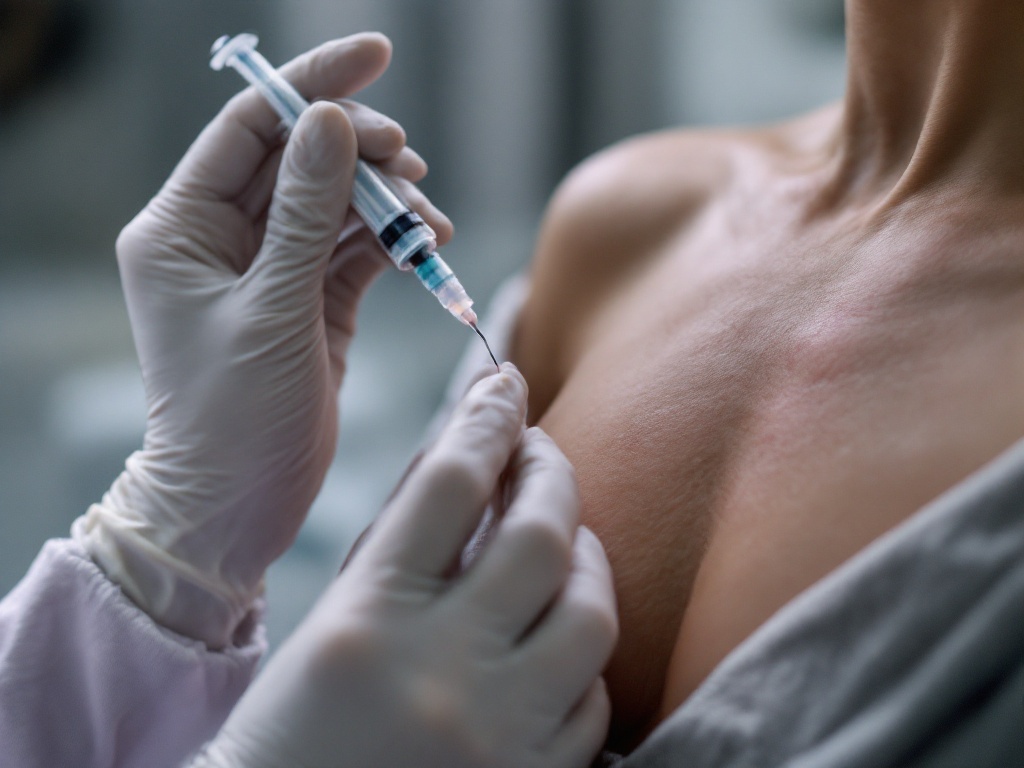
If you have a keloid and you ask a dermatologist about treatment, the first thing offered is almost always an injection. Usually that means triamcinolone acetonide, a corticosteroid, delivered directly into the scar tissue. Increasingly, it may also mean 5-fluorouracil, often shortened to 5-FU, a chemotherapy agent repurposed at low doses for scars. Patients frequently hear the two described interchangeably, as if they were the same medicine at different strengths. They are not. Understanding what each drug actually does inside a keloid helps explain why clinicians choose one, the other, or both together.
What a keloid is doing wrong. A keloid is a wound repair process that never receives the stop signal. Fibroblasts, the cells that lay down collagen after injury, remain switched on for months or years. They overproduce type I and type III collagen, they resist normal programmed cell death, and they respond abnormally to a signaling molecule called transforming growth factor beta, or TGF beta. The result is a firm mass of disorganized collagen that grows beyond the borders of the original wound. Any effective injectable has to interrupt some part of that loop.
How triamcinolone works. Corticosteroids attack the problem from several angles at once. They suppress the inflammation that keeps fibroblasts activated, they reduce fibroblast proliferation directly, and they increase the activity of collagenase, the enzyme that breaks existing collagen down. In practical terms, steroid injections both slow new scar production and help dissolve what is already there. That is why a keloid often softens and flattens over a series of treatments, typically spaced four to six weeks apart. Response rates in published series generally fall in the range of 50 to 100 percent for flattening, though recurrence after stopping treatment is common, often reported at 30 to 50 percent within a few years.
The trade-off is that steroids do not discriminate. Injected drug that spreads into surrounding healthy skin can cause atrophy, a thinning and dimpling of tissue, along with hypopigmentation, a lightening of skin color that is more visible and more distressing in darker skin tones. Telangiectasias, small visible blood vessels, can also appear. These effects are dose related, which is why technique and concentration matter as much as the drug itself.
How 5-FU works. Fluorouracil takes a narrower, more targeted approach. It is an antimetabolite that interferes with DNA synthesis, which preferentially affects rapidly dividing cells. In a keloid, the rapidly dividing cells are the overactive fibroblasts. 5-FU slows their proliferation and, importantly, dampens TGF beta signaling, which reduces the downstream production of collagen. Unlike steroids, it does not meaningfully break down existing collagen. Its strength is shutting off the factory rather than clearing the warehouse.
The side effect profile is different, not absent. Injection site pain tends to be more pronounced with 5-FU, and patients may see temporary darkening of the treated area, superficial ulceration, or crusting. What 5-FU largely avoids is the skin thinning and permanent lightening associated with steroids, which is a significant advantage for facial keloids, earlobe keloids, and patients with deeply pigmented skin.
Why combining them often works better. Multiple randomized trials over the past two decades have compared triamcinolone alone, 5-FU alone, and mixtures of the two, most commonly a small amount of triamcinolone diluted into a larger volume of 5-FU. The combination consistently performs at least as well as either drug alone on scar height and symptoms, and in several studies performs better, with fewer steroid related side effects because the steroid dose per session drops substantially. Mechanistically this makes sense: the steroid provides anti-inflammatory action and collagen breakdown, the 5-FU provides antiproliferative pressure on fibroblasts, and neither has to be pushed to a high dose.
What injections cannot do. No injectable removes a keloid. The realistic goals are flattening, softening, relief of itch and pain, and halting growth. Large, longstanding, pedunculated keloids often need surgical removal first, with injections or radiotherapy used afterward to prevent regrowth, because excision alone carries recurrence rates frequently cited above 50 percent and sometimes far higher. Injections after surgery target the fresh, biologically active scar before it can rebuild.
Practical takeaways. Expect a series, not a single shot: most protocols involve three to eight sessions. Ask what concentration is being used and whether combination therapy is appropriate for your skin type and scar location. Report any thinning or lightening of surrounding skin early, since dose adjustment can limit it. And treat recurrence as expected biology rather than treatment failure. Keloids are a chronic dysregulation of wound healing, and the most successful plans, like plans for other chronic conditions, involve monitoring and maintenance rather than a one time fix.
Related reading: Steroid Alone or Steroid Plus 5-FU: What the Evidence Says About Injecting Keloids.